Physical Address
304 North Cardinal St.
Dorchester Center, MA 02124
Physical Address
304 North Cardinal St.
Dorchester Center, MA 02124

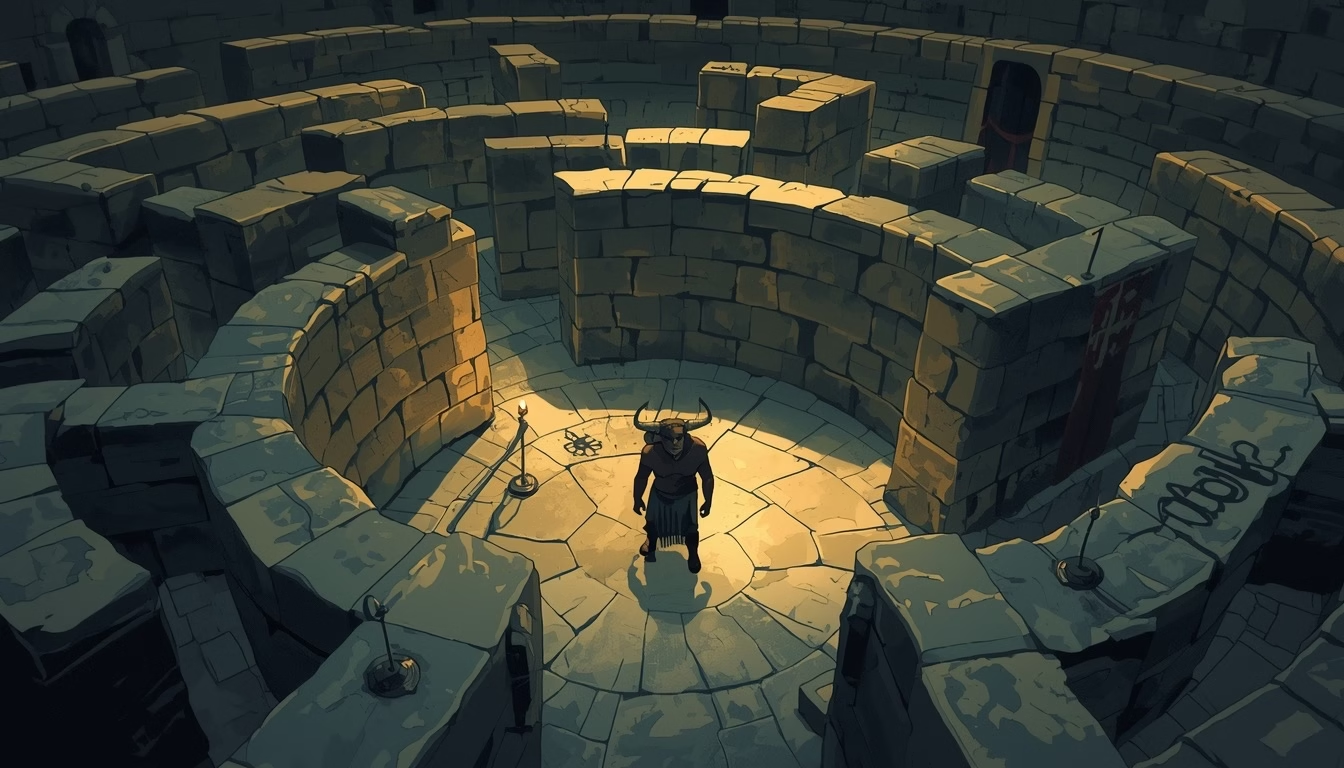
The Minotaur is one of the most unsettling figures in Greek mythology. Half man, half bull, trapped inside an inescapable maze, he is less a roaming monster and more a secret hidden at the center of power.
The legend of the Minotaur is not only about heroism. It is about shame, control, sacrifice, and what happens when authority chooses containment over responsibility.
The Minotaur’s existence begins with broken promises and divine punishment.
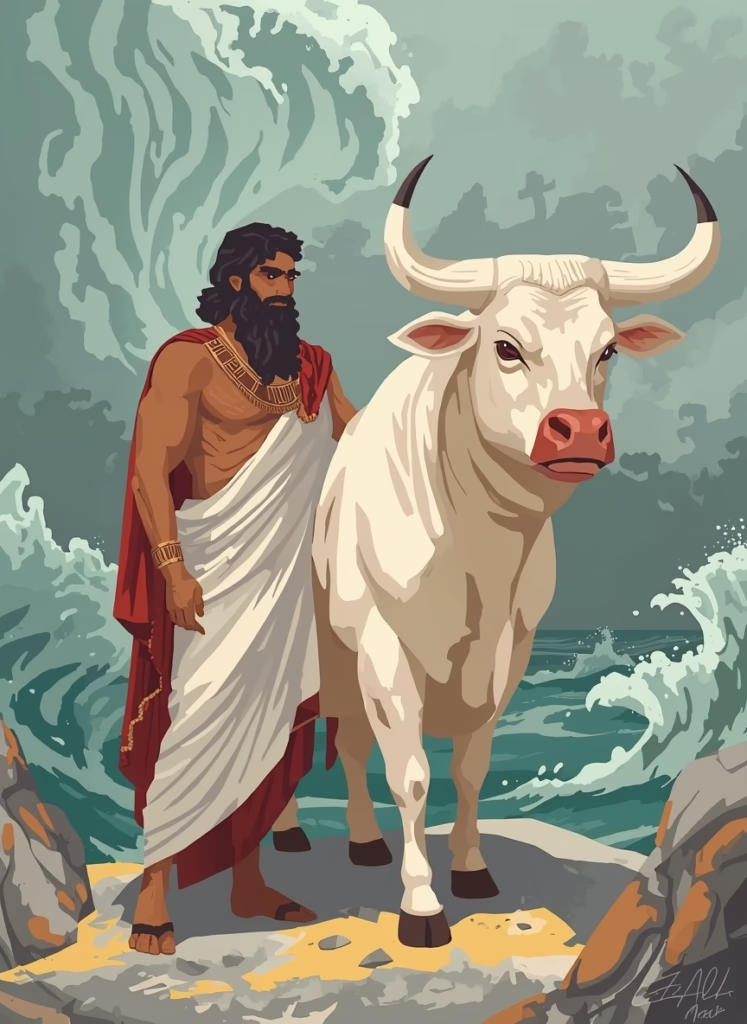
King Minos asked Poseidon for a sign to prove his right to rule Crete. Poseidon sent a magnificent white bull, meant to be sacrificed in the god’s honor.
Minos kept the bull instead.
This refusal matters. In Greek myth, withholding what belongs to the gods always creates imbalance.
Poseidon’s response is indirect and devastating.
He causes Pasiphaë, Minos’s wife, to fall in love with the bull. With the help of the craftsman Daedalus, Pasiphaë conceives a child.
That child is the Minotaur.
The Minotaur is not evil by choice. He is the physical result of:
From the start, the Minotaur is something that should not exist, yet does.
Unable to kill the creature, Minos orders Daedalus to build the Labyrinth, a structure designed not to be escaped.
The Minotaur is imprisoned at its center.
The Labyrinth is as important as the monster itself. It represents:
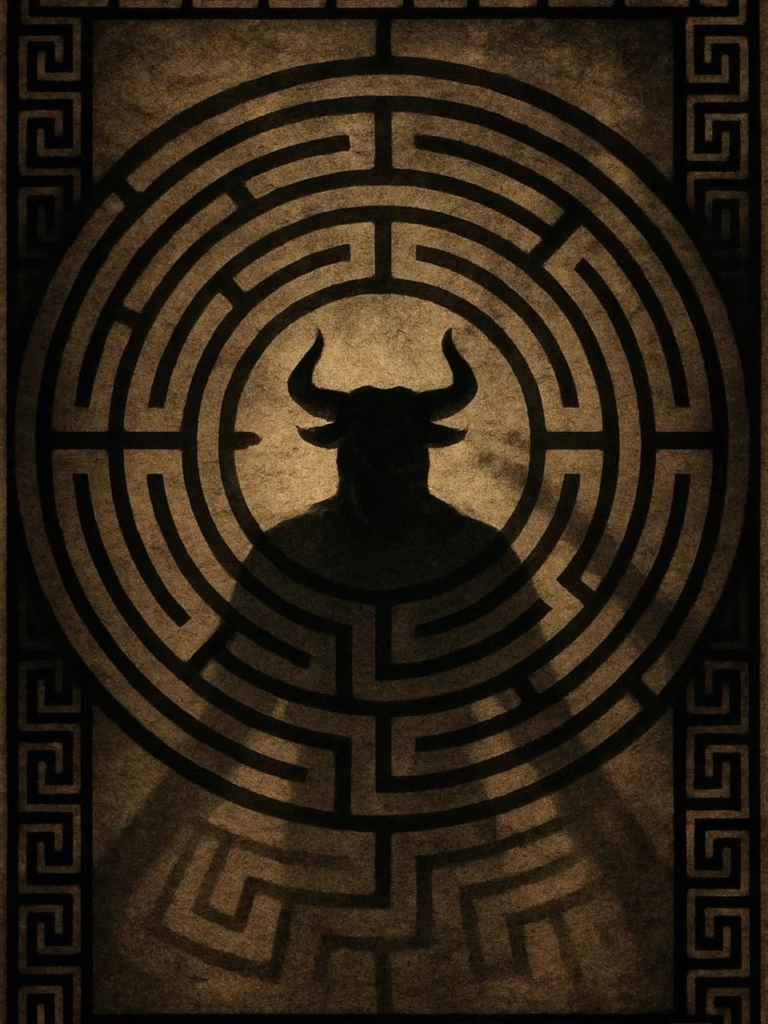
The Minotaur does not roam. He is fed.
As punishment for political conflict, Athens is forced to send seven young men and seven young women to Crete every nine years.
They are sent into the Labyrinth to die.
This transforms the Minotaur from a hidden shame into a machine of terror. The monster becomes a tool of dominance, even though he did not choose his role.
The cycle ends when Theseus volunteers to be part of the tribute.
His goal is not survival. It is confrontation.
Minos’s daughter Ariadne falls in love with Theseus and gives him a simple but crucial tool: a thread.
The thread is not a weapon. It is knowledge.
Theseus kills the Minotaur inside the Labyrinth. The myth is sparse on details of the fight itself.
What matters is what comes after.
Theseus follows the thread back out.
The victory is not just over a monster. It is over:
The Minotaur dies, but the Labyrinth is exposed.
The myth does not end cleanly.
Theseus abandons Ariadne. Through a series of mistakes, his father dies believing his son dead. Daedalus is imprisoned. Later, he escapes, but at great cost.
Greek myths rarely reward heroes without consequence.
The Minotaur is not simply a beast to be defeated.
He represents:
The Labyrinth exists because no one wants to take responsibility for the creature at its heart.
In ancient art, the Minotaur appears as both savage and sorrowful. Later interpretations often emphasize his isolation rather than his violence.
In modern symbolism, the Minotaur is frequently used to represent:
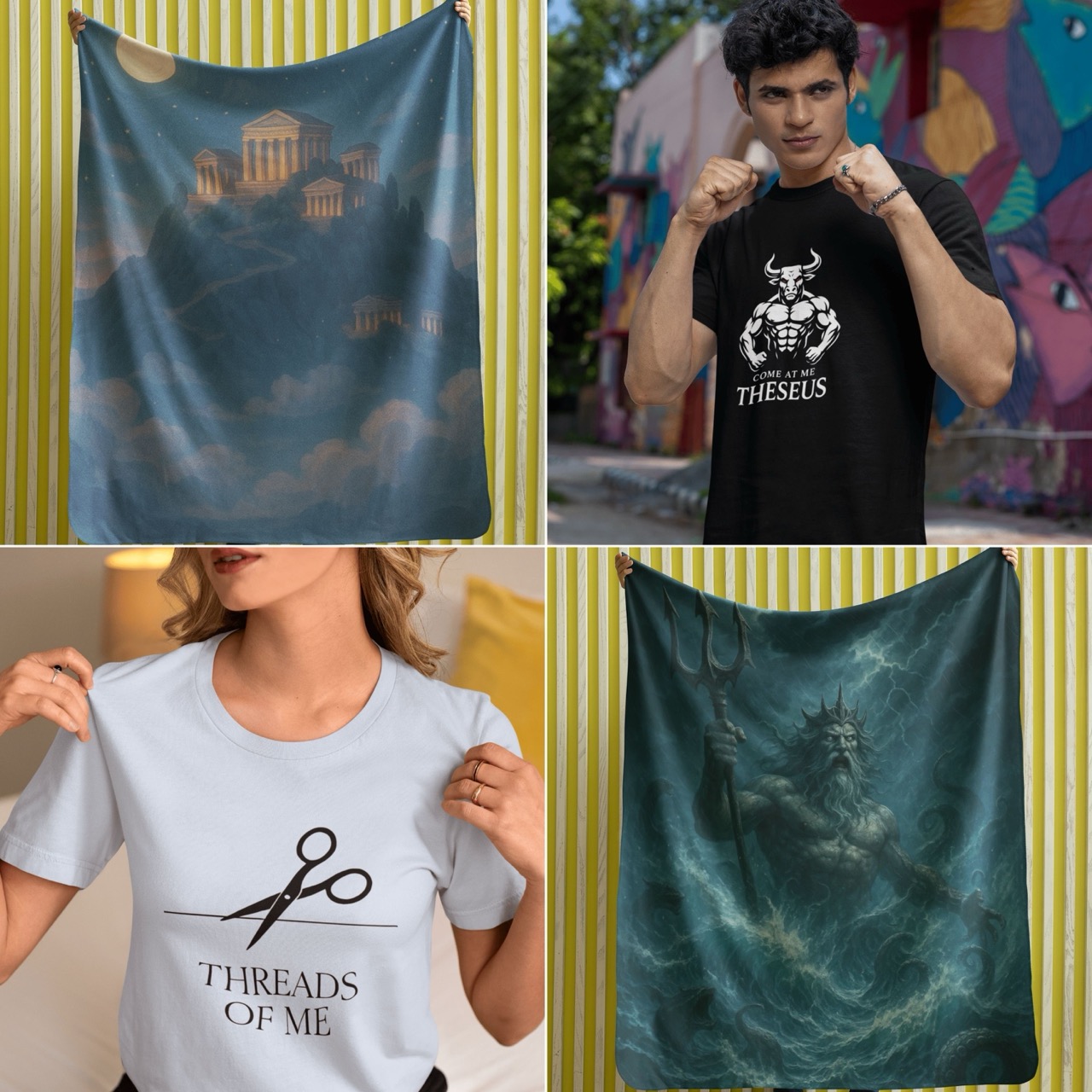
That symbolism translates easily into everyday imagery. Labyrinth patterns, bull motifs, and thread designs appear often in modern design because they communicate struggle, complexity, and escape without needing explanation.
These symbols work especially well on items meant to be used rather than displayed, like shirts and hoodies that carry meaning outward, or blankets and desk mats that shape a personal space around story and identity.
The legend of the Minotaur is not just a hero killing a monster. It is a story about power refusing accountability, about systems built to hide failure, and about violence created through neglect.
The Minotaur is terrifying, but he is also tragic. He is born from broken promises and destroyed to preserve order, leaving the structures that created him largely intact.
That tension is why the Minotaur remains one of the most enduring figures in Greek mythology.