Physical Address
304 North Cardinal St.
Dorchester Center, MA 02124
Physical Address
304 North Cardinal St.
Dorchester Center, MA 02124

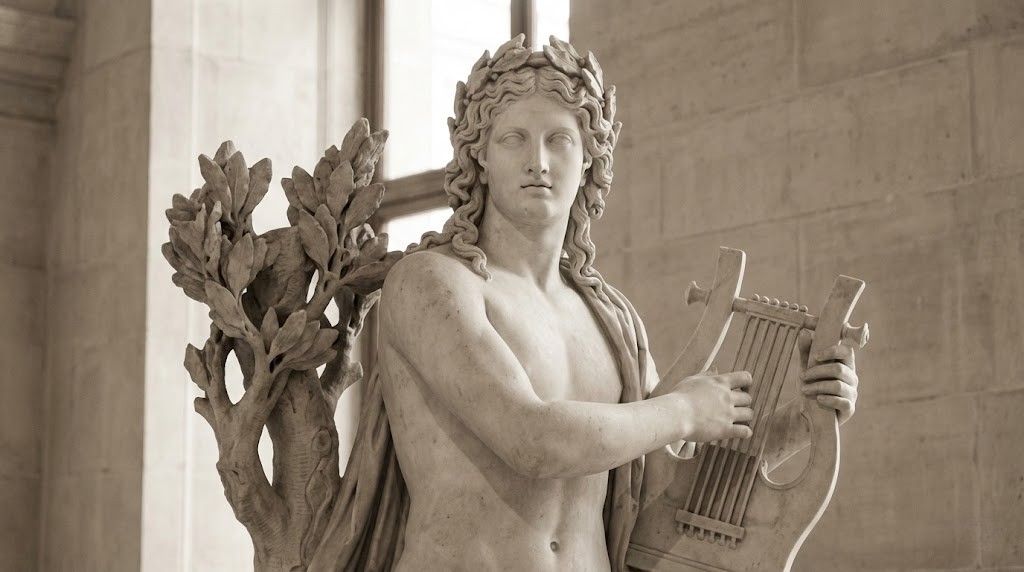
The laurel wreath is one of the most recognizable symbols from Greek mythology, but its meaning goes far beyond decoration. It represents victory, divine favor, artistic excellence, and a very specific myth about desire, loss, and transformation.
If you’ve seen laurel wreaths in statues, paintings, or modern designs and wondered why they mattered so much, this is where it starts to make sense.
The laurel wreath is directly tied to the myth of Apollo and Daphne.
According to the myth, Apollo mocked Eros, the god of love, for his small bow. In response, Eros struck Apollo with a golden arrow that caused overwhelming desire and struck Daphne, a nymph, with a lead arrow that caused rejection.
Apollo pursued Daphne relentlessly. As she fled, she prayed for escape. Her prayer was answered when she was transformed into a laurel tree.
Apollo, devastated, declared the laurel sacred to him. He vowed that its leaves would never fade and that victors, poets, and heroes would wear laurel in her honor.
This moment establishes the laurel wreath as a symbol of:
After Daphne’s transformation, Apollo adopted the laurel as his emblem. From that point on, the tree symbolized qualities closely associated with him.
Because Apollo represented order, clarity, and reason, the laurel became a symbol of disciplined excellence rather than brute power.
In ancient Greece, laurel wreaths were awarded to victors in athletic, musical, and poetic competitions.
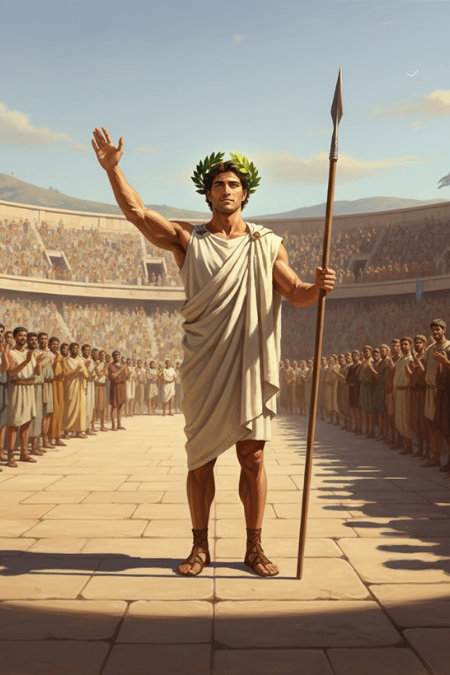
This included:
The wreath mattered because it was temporary. Laurel leaves fade. Victory was honored, but never permanent.
This reflects a core Greek idea: glory exists, but it does not last forever. Memory is what gives it weight.
The laurel wreath carries several layered meanings that often appear together.
This is why laurel wreaths appear so often in depictions of poets, philosophers, and thinkers rather than warriors alone.
Over time, the laurel wreath became shorthand for excellence.
The word laureate, still used today, comes directly from this tradition. A poet laureate is symbolically crowned with laurel, connecting modern achievement to ancient myth.
In visual art, a laurel wreath often signals:
When you see a laurel wreath in modern design, it usually carries these inherited meanings, even if subtly.
Today, the laurel wreath is widely used in fashion, decor, and academic imagery because it communicates prestige without aggression.
It works especially well for:

Wearing or displaying a laurel wreath symbol often suggests respect for knowledge, effort, and legacy rather than dominance.
If you want to explore PromyTheo products that feature classical symbolism like the laurel wreath, you can browse the apparel and home items here.
Items like hoodies, shirts, blankets, or desk mats work especially well for people who want mythological meaning without heavy imagery.
In Greek mythology, the laurel wreath represents victory shaped by loss, excellence shaped by discipline, and memory shaped by transformation. Its meaning comes from a myth that values restraint as much as achievement.
If you want to explore more myth symbols and understand why they still matter today, check out the other PromyTheo blog posts that break down gods, objects, and stories one symbol at a time.