Physical Address
304 North Cardinal St.
Dorchester Center, MA 02124
Physical Address
304 North Cardinal St.
Dorchester Center, MA 02124
You can tell a lot about Greek mythology by looking at its monsters. They are rarely random. Each creature is built around a fear, a temptation, or a warning. Some are punishments. Some are obstacles. Some feel like nature itself turning hostile.
If you’re new to Greek mythology, learning the monsters is one of the fastest ways to understand the bigger themes, because monsters show you what the Greeks thought could break a person.
Greek monsters and creatures usually fall into a few roles. Knowing the role helps you understand why the creature exists in the story.
A monster is rarely only a monster. It is a story tool that makes an idea unforgettable.
Here are the creatures you’ll see again and again, with the clearest beginner explanations.
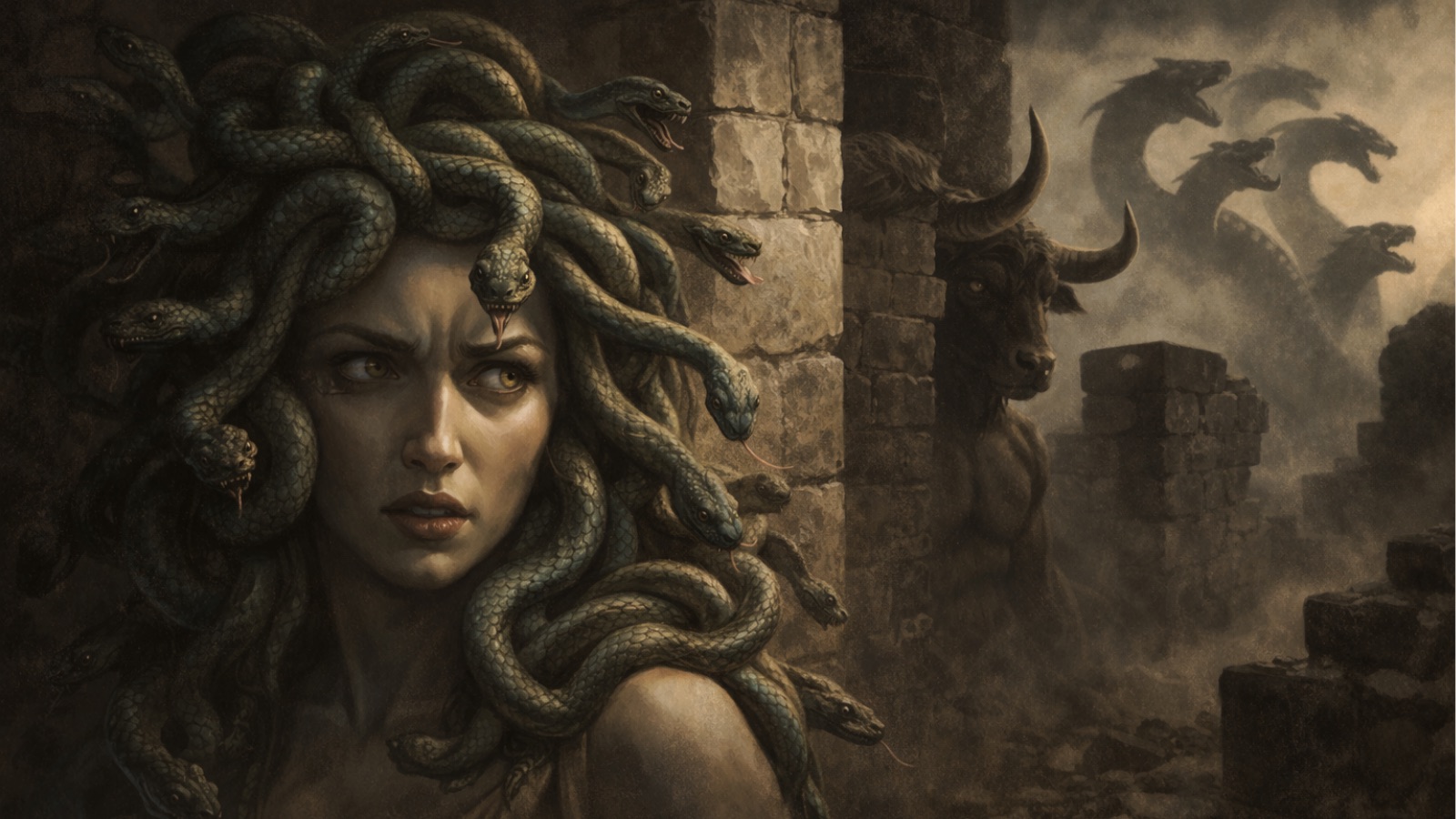
Medusa is the most famous Gorgon, a figure whose gaze turns people to stone.
Medusa sits at the intersection of fear, power, and transformation. In many later versions of the myth, the question is not only how Perseus defeats her, but what her story says about danger, beauty, and punishment.
Key myth connection: Perseus defeats Medusa using reflection rather than direct sight, which is a classic Greek lesson: you cannot face some threats head-on without losing yourself.
The Minotaur is half man, half bull, trapped inside the Labyrinth on Crete.
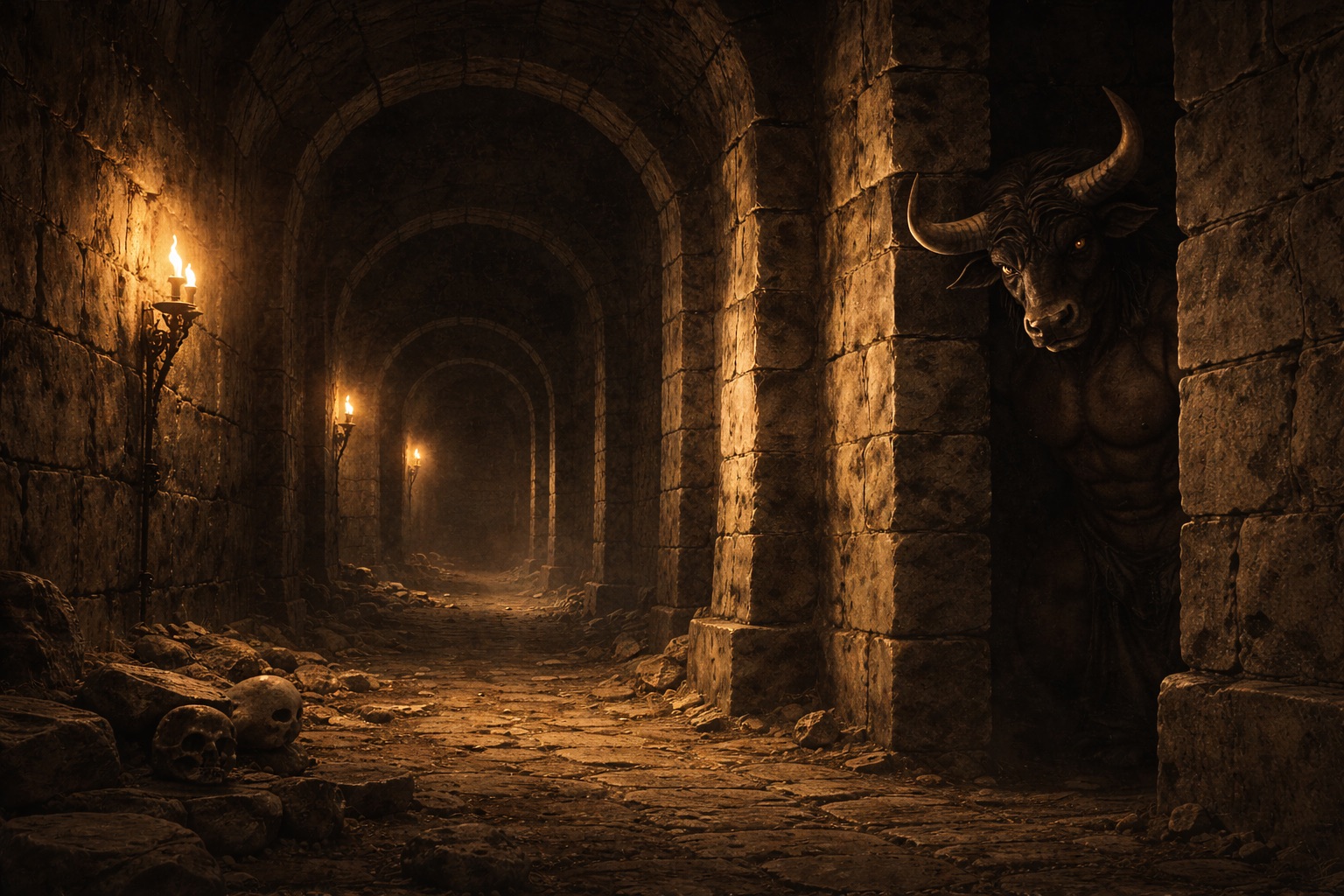
The Minotaur is a monster of confinement. It is violence hidden inside a system. The Labyrinth matters as much as the creature because the danger is not only teeth, it’s disorientation.
Key myth connection: Theseus succeeds with help and a plan. Greek myths often reward strategy, not just bravery.
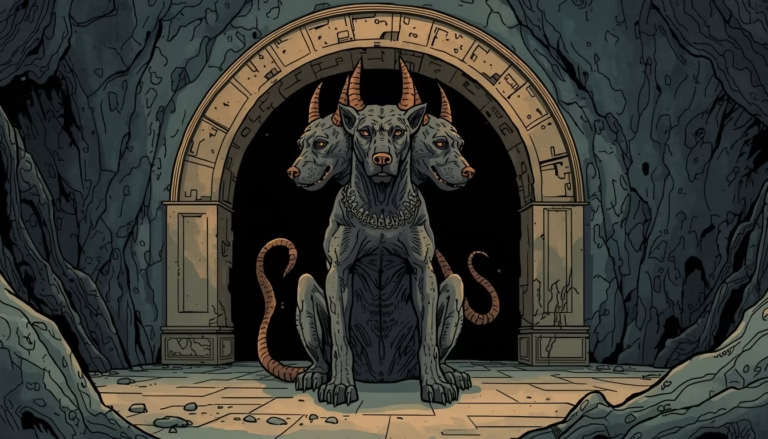
Cerberus is the multi-headed guard dog of the underworld who prevents the dead from leaving.
Cerberus is a boundary creature. He symbolizes the one-way nature of death. In Greek thought, the underworld isn’t a place you “beat.” It is a law of existence.
Key myth connection: Heracles bringing Cerberus to the surface is not just a flex. It’s a moment where the hero crosses a limit and returns, which is one of the biggest hero motifs in myth.
The Lernaean Hydra is a serpent-like monster that grows two heads for every one cut off.
The Hydra is the problem that multiplies when attacked the wrong way. It’s a mythic version of compounding consequences.
Key myth connection: Heracles cannot defeat the Hydra alone or with brute force. He needs method and assistance. That’s a recurring Greek idea: strength without technique fails.
The Chimera is a composite beast, often described as lion, goat, and serpent, breathing fire.
The Chimera embodies chaos and the unnatural. It is the threat that doesn’t fit categories, which makes it harder to fight.
Key myth connection: Bellerophon defeats the Chimera with the help of Pegasus, which highlights another common pattern: heroes often need divine or extraordinary support to overcome the impossible.
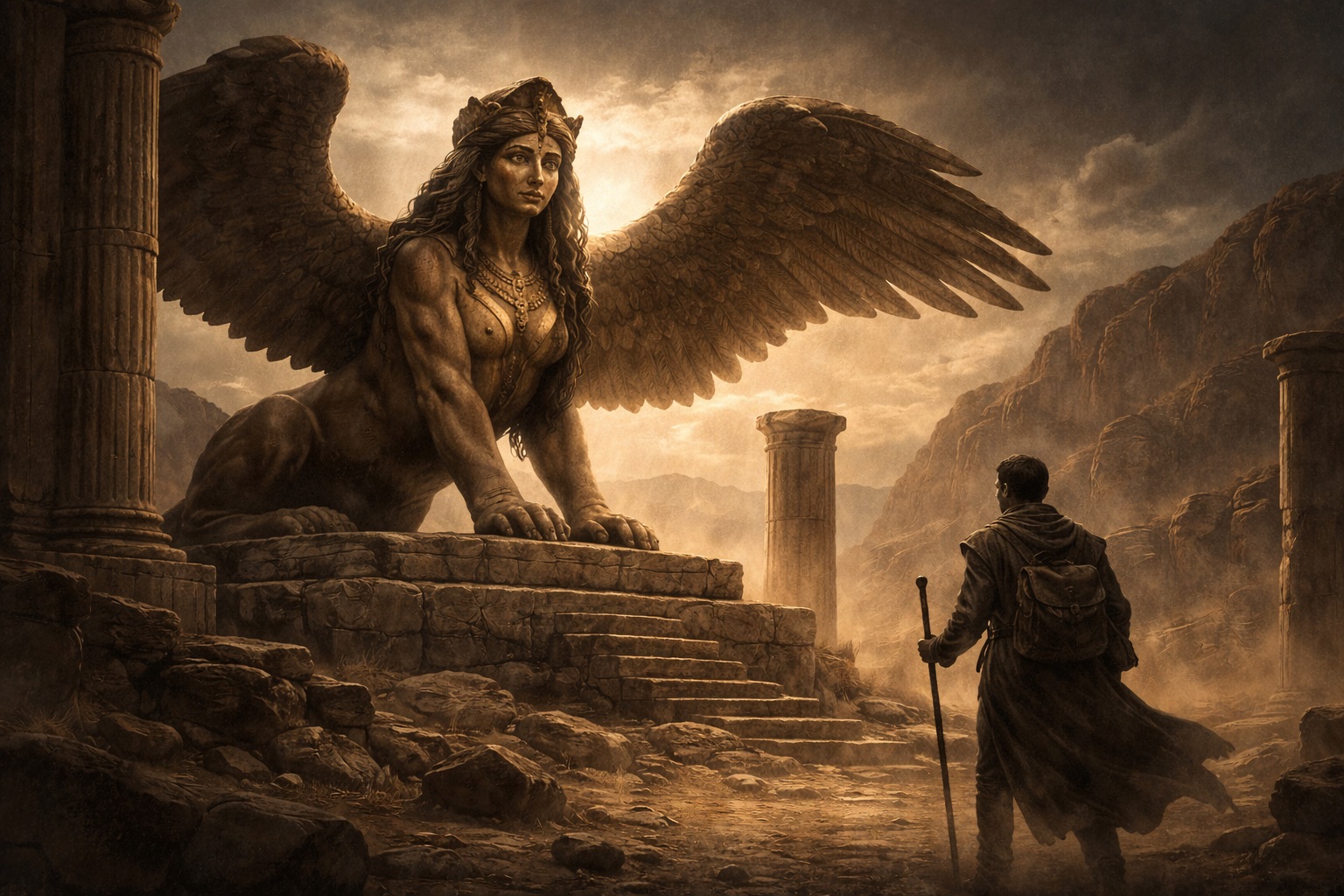
The Greek Sphinx is a riddle-giver who kills those who cannot answer.
The Sphinx is intelligence turned predatory. It’s not about muscles, it’s about meaning. The danger is ignorance.
Key myth connection: Oedipus solves the riddle, but the larger story warns that solving one puzzle does not mean you understand your own life.
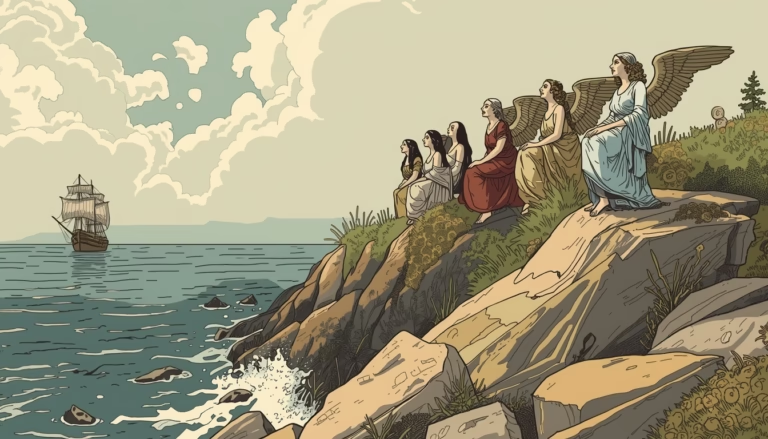
Sirens lure sailors to destruction with irresistible song.
Sirens represent temptation that feels like knowledge or beauty. The danger is desire wearing a pleasant face.
Key myth connection: Odysseus survives not by resisting temptation through willpower, but by planning for his own weakness. Greek heroes are often realistic about human limits.
Harpies are winged spirits associated with storms, theft, and violent snatching.
Harpies often show up as a form of torment, especially in stories where someone is being punished. They represent chaos that ruins order, spoils food, and makes life unlivable.
Not every creature is a single, beatable opponent. Some feel like the world itself pushing back.
Scylla is a monster who snatches sailors from ships. Charybdis is a deadly whirlpool.
Together they represent the terror of the sea and the idea of impossible choices. Sometimes the myth is saying: you can survive, but you will not survive untouched.
Typhon is a monstrous force that challenges Zeus himself.
Typhon represents the ultimate chaos threat, the world before order. When Zeus defeats Typhon, it’s mythology explaining why the cosmos has structure at all.
Greek monsters stick in the mind because their imagery is sharp. That’s why they still show up in design, tattoos, sports logos, and fashion. Monsters communicate identity fast: resilience, danger, cleverness, transformation.
If you like subtle myth references in daily life, creature symbols work especially well on things you use often:
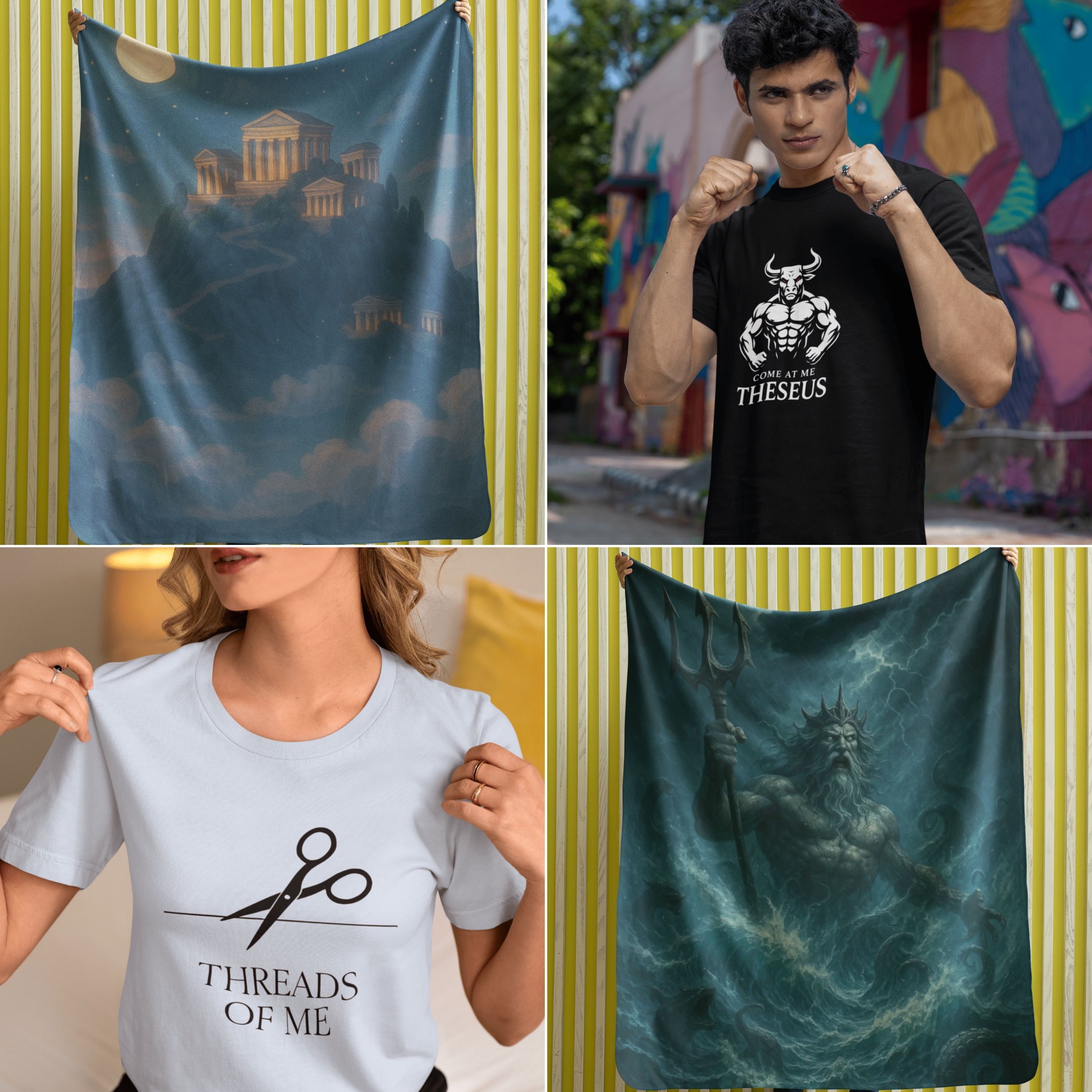
If you want to browse PromyTheo product categories like shirts, hoodies, blankets, or desk mats.
Greek monsters and creatures aren’t random monsters dropped into stories for excitement. They represent fears, boundaries, and consequences in a world shared by gods and humans. Once you learn what a monster stands for, you understand the myth faster, and you start seeing why these creatures still feel alive in modern culture.
If you want to keep building your foundation, check out the other PromyTheo blog posts on gods, heroes, and myth symbols. They connect naturally, and the monsters make even more sense once you know the divine and human forces they collide with.