Physical Address
304 North Cardinal St.
Dorchester Center, MA 02124
Physical Address
304 North Cardinal St.
Dorchester Center, MA 02124

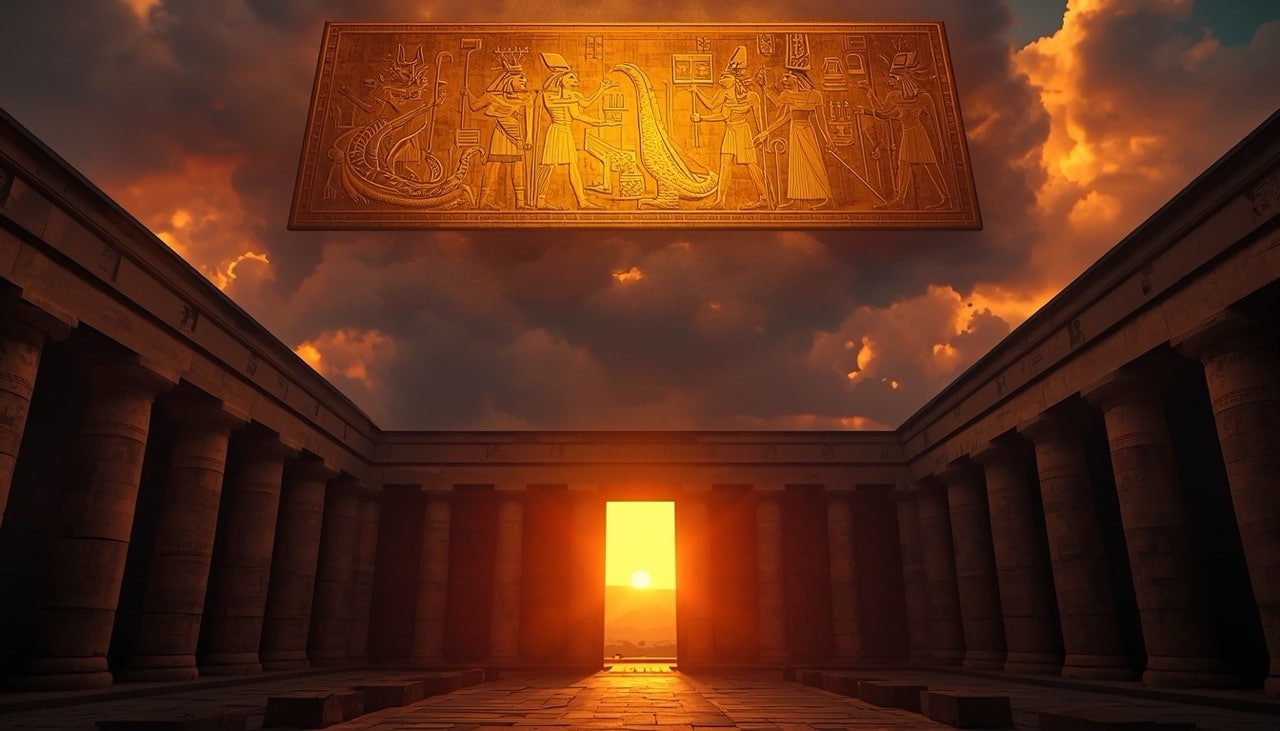
The rich tapestry of ancient Egyptian religion is a fascinating tableau of gods, goddesses, and demonic figures, each playing a pivotal role in the daily lives and spiritual practices of the ancient Egyptians. For over 3,000 years, this pantheon of more than 2,000 deities influenced every aspect of life, from the mundane to the cosmic. This duality, between benevolent gods who nurtured and protected and malevolent demons who threatened and tested, shaped the very core of ancient Egyptian beliefs. This blog post aims to delve into the intriguing duality of these deities and explore how they collectively structured the Egyptians’ understanding of the natural and supernatural world.
Ancient Egyptian mythology is replete with gods and goddesses who personified positive forces and ideals. These deities were often associated with creation, fertility, and protection. Ra, the sun god, was a central figure who embodied light and creation. He sailed across the sky by day and journeyed through the underworld by night, symbolizing the cycle of life, death, and rebirth. Meanwhile, Nut, the sky goddess, was seen as the protective canopy over the earth, ensuring the balance of the cosmos.
Isis, known as the mother goddess, was revered for her nurturing and magical abilities. Her role as the wife of Osiris and mother of Horus placed her at the heart of Egyptian mythology, symbolizing motherhood, healing, and protection. Osiris himself was a symbol of resurrection and eternal life, ruling the afterlife and granting the promise of rebirth to the faithful.
These benevolent deities were worshipped not just as cosmic entities but also as personal protectors who could be called upon in times of need. Their statues adorned temples, and their stories were recounted in myths that emphasized moral values and cultural norms.
In stark contrast to the benevolent gods were the malevolent demons, figures that embodied chaos, destruction, and evil. These entities were not worshipped but were acknowledged and feared for their capacity to disrupt the balance of ma’at, the ancient Egyptian concept of truth, balance, and cosmic order.
Ammut, the devourer, was a fearsome demon associated with the afterlife. She was depicted with the head of a crocodile, the body of a lion, and the hindquarters of a hippopotamus. Ammut’s role was to consume the hearts of those deemed unworthy, thereby preventing them from entering the afterlife. Similarly, Apepi (or Apophis) was a serpent demon who represented chaos and was the eternal enemy of Ra. Each night, Apepi attempted to devour Ra during his journey through the underworld, symbolizing the eternal struggle between order and chaos.
These demons served to remind the ancient Egyptians of the ever-present dangers that lurked beyond the structured world of ma’at. They were not merely adversaries but also teachers, illustrating the importance of living a life of virtue and adherence to divine law.
One of the most fascinating aspects of Egyptian deities is their fluidity between benevolence and malevolence. Unlike the rigid dichotomies often seen in modern religions, Egyptian gods and goddesses could embody both good and evil, reflecting the complexities of human nature and the universe.
The god Set, for example, is a figure of complexity. Originally a deity of storms and the desert, Set became associated with chaos and violence after he killed his brother Osiris. However, Set was also a protector of Ra, defending him against Apepi’s nightly assaults. This duality illustrates the Egyptian understanding that chaos and order are not mutually exclusive but are instead interdependent forces.
Moreover, the goddess Sekhmet, known as a fierce warrior and bringer of plague, was also revered as a healer. Her dual nature underscores the belief that destruction and healing are part of a natural cycle, each necessary for the renewal of life.
Over millennia, the Egyptian pantheon evolved from animistic roots to a complex system of anthropomorphic and magical entities. Central to this evolution was Heka, the god of magic, who was believed to be integral to creation and the sustenance of life. Heka’s presence in rituals and daily life underscored the Egyptians’ belief in the power of magic as a force that could influence both the seen and unseen worlds.
The principle of ma’at was crucial in this belief system, representing a divine order that needed to be maintained through both human actions and divine intervention. The goddess Ma’at was the personification of this principle, ensuring that the balance between benevolent gods and malevolent demons was upheld.
The duality of Egyptian deities, embodied in benevolent gods and malevolent demons, offers a profound insight into the ancient Egyptians’ understanding of their world. These deities were more than mere figures of worship; they were integral to the Egyptians’ comprehension of life, death, and the cosmos. Through their stories, rituals, and depictions, we see a civilization deeply engaged with the complexities of existence, seeking to balance the forces of creation and destruction, order and chaos.
In exploring the duality of these deities, we gain a deeper appreciation of the ancient Egyptians’ spiritual and cultural legacy. Their pantheon continues to captivate our imaginations, reminding us of the timeless human quest to understand the mysteries of the universe and our place within it.