Physical Address
304 North Cardinal St.
Dorchester Center, MA 02124
Physical Address
304 North Cardinal St.
Dorchester Center, MA 02124
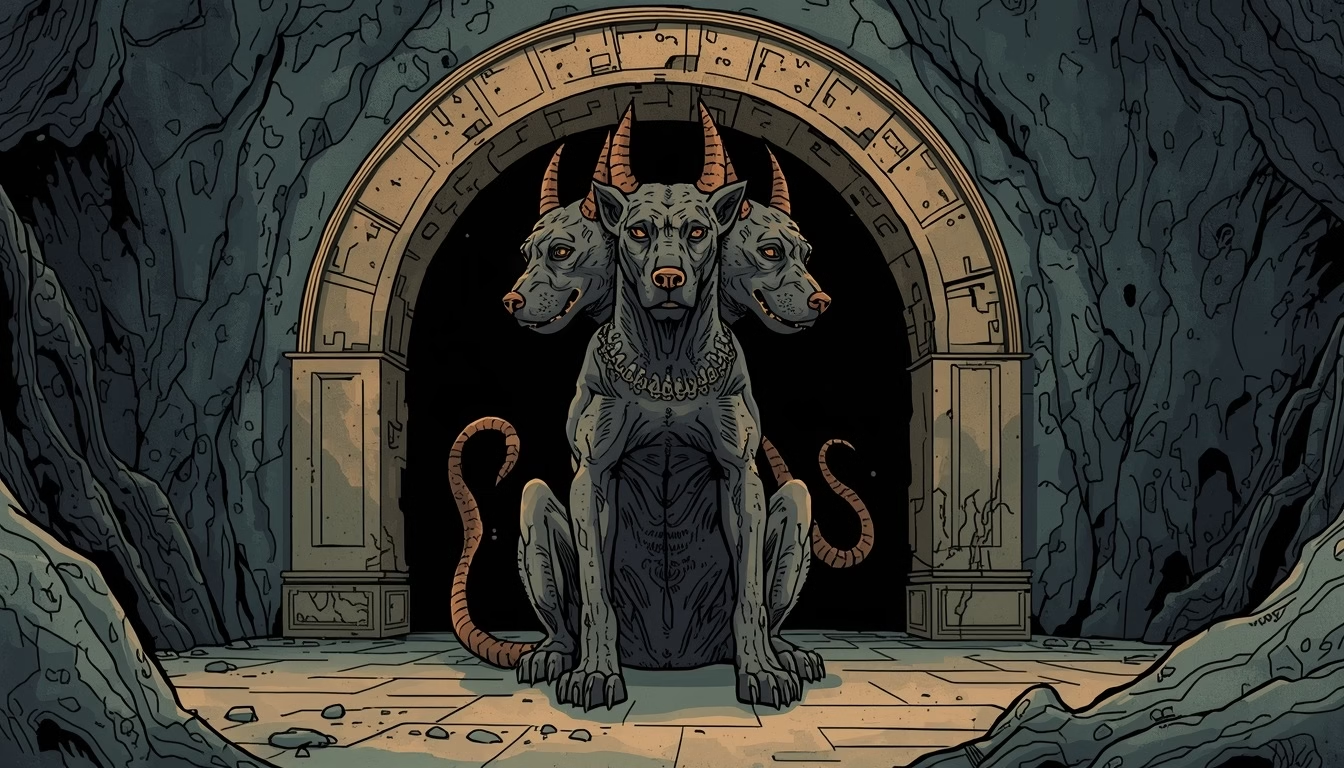
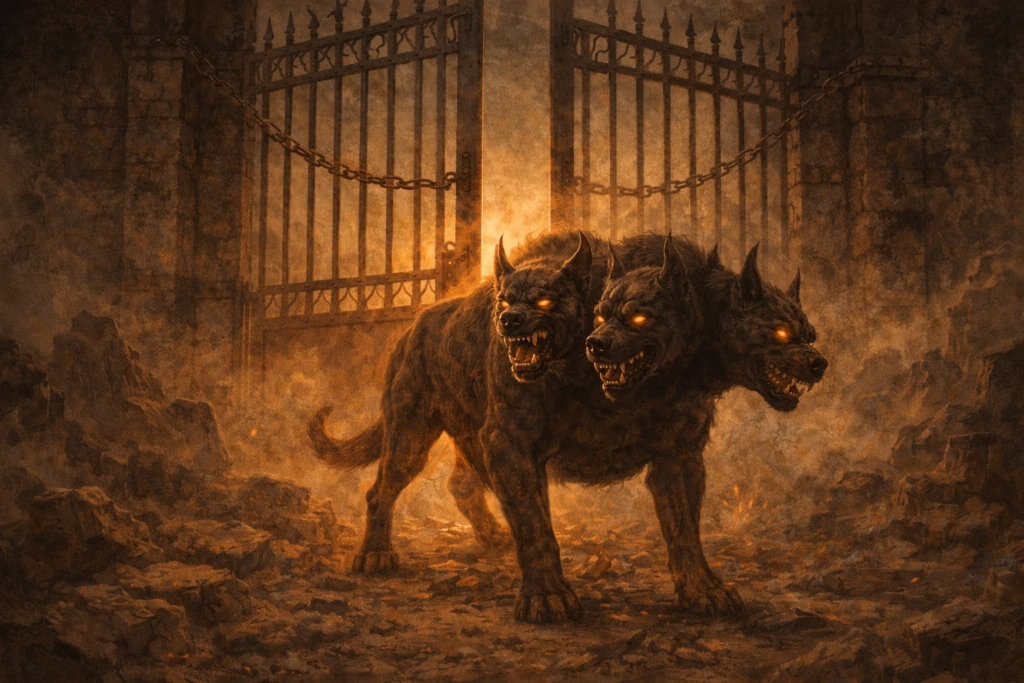
Cerberus is one of the most iconic creatures in Greek mythology. A massive hound with multiple heads, stationed at the gates of the underworld, Cerberus is not a monster that hunts heroes or terrorizes cities. He stays exactly where he is meant to be.
Cerberus exists to enforce a rule the Greeks considered absolute: the boundary between the living and the dead cannot be crossed freely.
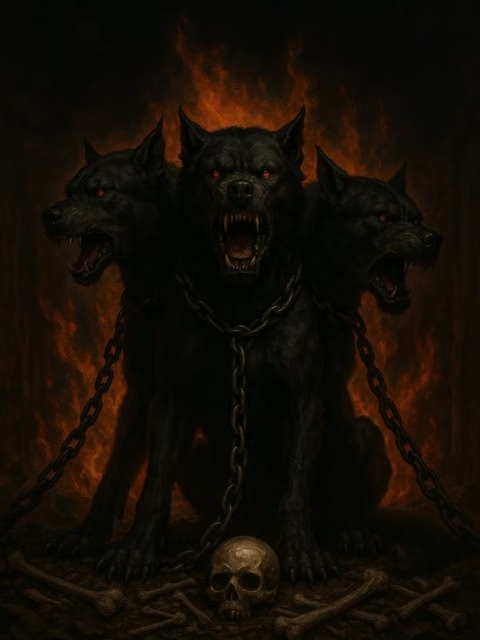
Cerberus is the guardian of the underworld, serving Hades. His role is simple and terrifyingly final.
He allows the dead to enter.
He prevents the dead from leaving.
In some descriptions, Cerberus has three heads. In others, he has many more. He is often said to have a serpent’s tail and snakes growing from his body. The exact anatomy varies, but the function never changes.
Cerberus is not cruel. He is absolute.
Cerberus is born from two of the most dangerous beings in Greek mythology.
This lineage places Cerberus among creatures that represent primal fear and cosmic threat. Yet unlike many of his siblings, Cerberus is not a roaming force of destruction.
He is contained. Purpose-built. Stationary.
That contrast is important.
Cerberus is often misunderstood as a beast meant to punish the dead. That is not his function.
He does not judge souls.
He does not torture.
He does not chase intruders across the world.
Cerberus enforces separation.
In Greek thought, death is not a moral failure. It is a condition of existence. Cerberus exists to make that condition irreversible.
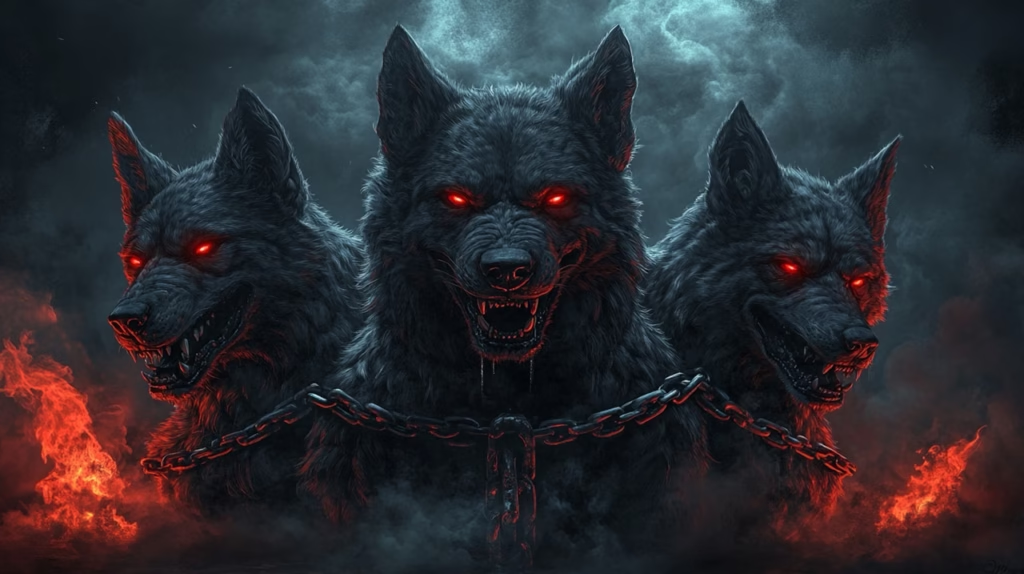
Most myths emphasize that Cerberus is dangerous not to the dead, but to the living.
To encounter Cerberus means you have crossed a boundary you were never meant to cross.
Very few figures do.
The most famous myth involving Cerberus appears in the final labor of Heracles.
As his twelfth and final labor, Heracles is ordered to bring Cerberus up from the underworld alive.
Hades agrees, on one condition:
Heracles must use no weapons.
Heracles succeeds by overpowering Cerberus with his bare hands, then returns him unharmed.
This is not a story about killing death.
It is about:
Cerberus is not defeated. He is returned to his post.
Order is restored.
Cerberus represents something very specific in Greek mythology.
Cerberus does not tempt. He does not deceive. He simply exists as a living “no.”
The choice of a dog is not accidental.
Dogs were guardians, companions, and watchers in ancient Greek life. Cerberus exaggerates that familiar role into something cosmic.
He is loyalty without mercy.
Protection without affection.
Guardianship without exception.
That familiarity makes him more unsettling, not less.
In ancient Greek art, Cerberus often appears smaller than modern depictions suggest. He is restrained, leashed, or seated beside Hades.
Later traditions make him more monstrous, emphasizing:
The shift reflects changing ideas about death itself. The more frightening death becomes, the more terrifying its guardian appears.
Cerberus is not a villain in Greek mythology. He is a function. A guardian placed where rules must never bend.
His presence reminds us that Greek myths are not always about defeating monsters. Sometimes they are about respecting limits. Cerberus stands at the edge of existence to make sure that boundary remains intact.
That quiet, immovable role is exactly why he remains one of the most powerful figures in Greek mythology.