Physical Address
304 North Cardinal St.
Dorchester Center, MA 02124
Physical Address
304 North Cardinal St.
Dorchester Center, MA 02124


The Sirens are among the most psychologically dangerous beings in Greek mythology. They do not attack with claws or fire. They sing. Their power lies in persuasion, promise, and the illusion of understanding.
Sailors do not follow the Sirens because they are forced to. They follow because they want to.
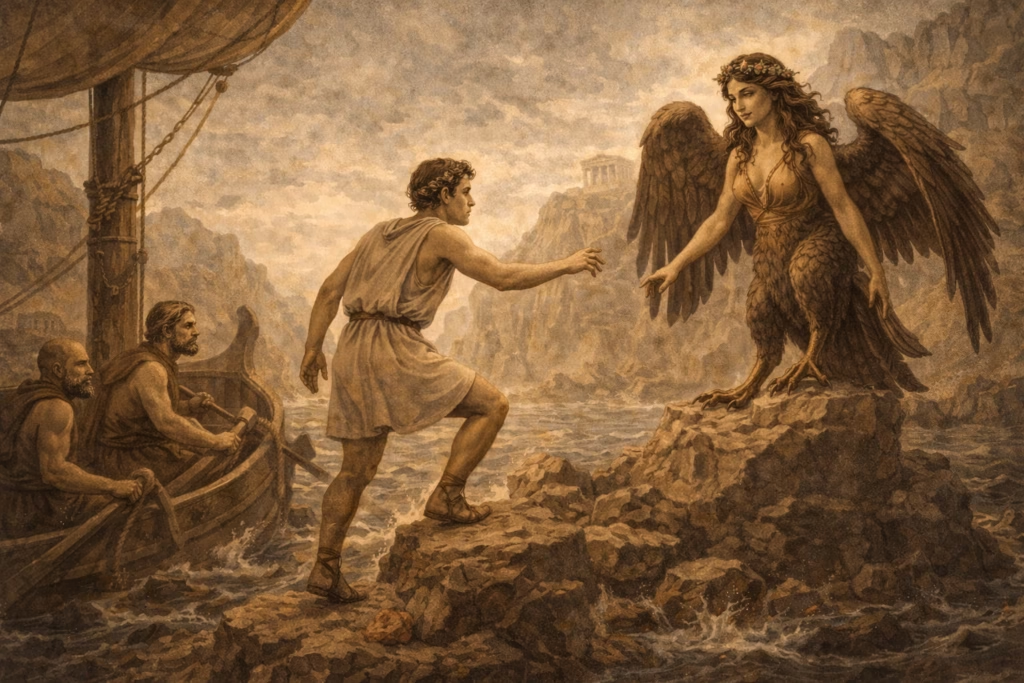
In early Greek myth, the Sirens are hybrid creatures, usually described as part woman and part bird. Later art sometimes shifts them toward a more mermaid-like form, but the original image emphasizes flight and voice rather than water.
The Sirens live on rocky islands surrounded by shipwrecks. Their victims are not dragged under the sea. They crash themselves.
This matters. The Sirens do not destroy bodies directly. They redirect desire.
Ancient sources vary, but the Sirens are often connected to divine lineage and punishment.
They are commonly described as daughters of:
In some traditions, the Sirens are companions of Persephone who are transformed after her abduction. In others, they are born as they are. Greek mythology allows multiple origins to exist side by side.
What remains consistent is their function. They are beings tied to knowledge, memory, and song.
The Sirens do not promise pleasure alone. They promise meaning.
In Homeric tradition, their song offers:
They claim to know everything that has happened and everything that matters.
This is what makes them lethal. The Sirens weaponize curiosity and self-importance. They convince the listener that stopping is rational.
The most famous encounter with the Sirens occurs in the story of Odysseus.
Odysseus wants to hear the Sirens’ song and survive. He orders his crew to plug their ears with wax and tie him to the mast. He instructs them not to release him, no matter what he says.
As the ship passes, Odysseus hears the song and begs to be freed. The crew obeys his earlier command, not his present desire.
The ship passes safely.
Odysseus does not defeat the Sirens by resisting temptation. He defeats them by planning for his own weakness.
Greek mythology is often realistic about human limits. Intelligence is not the absence of desire. It is preparation for it.
The Sirens embody a very specific danger: temptation that feels justified.
The Sirens do not lie outright. They tell truths selectively, shaped to pull the listener closer.

Music bypasses logic. It moves directly into emotion and identity. In myth, song often represents memory, persuasion, and control.
The Sirens’ voices erase distance. The listener forgets the ship, the sea, and the danger. All that remains is the promise of being understood.
That is why silence, wax, and restraint are the only defenses.
In early Greek art, Sirens appear solemn and still, perched like watchers. Later art makes them seductive and dramatic. Each version reflects cultural anxieties about persuasion, femininity, and voice.
Over time, Sirens become a metaphor used far beyond mythology:
The word “siren” still carries this meaning today.
The Sirens are not monsters of violence. They are monsters of invitation. They destroy by convincing you that stopping is your idea.
Their myth endures because it describes a danger that never disappears: the voice that tells you this knowledge is meant just for you, and that you deserve to abandon everything else to hear it.
Stories of temptation, restraint, and survival echo across the other PromyTheo blog posts throughout the site, especially myths that explore how intelligence works best when it plans for human weakness rather than denying it.