Physical Address
304 North Cardinal St.
Dorchester Center, MA 02124
Physical Address
304 North Cardinal St.
Dorchester Center, MA 02124

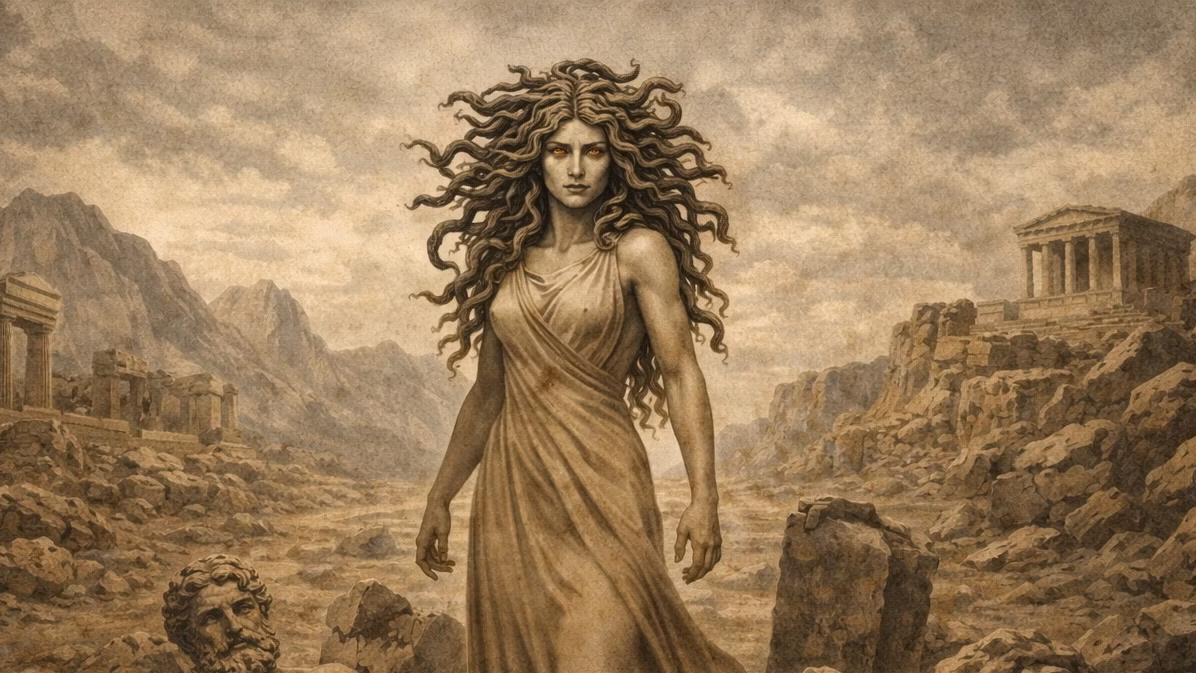
Medusa is one of the most recognizable figures in Greek mythology, but her origin is often flattened into a single image: a monster with snakes for hair whose gaze turns people to stone. In the myths, her story is more complex and far more revealing about how the Greeks understood power, punishment, and fear.
To understand Medusa properly, it helps to begin with the Gorgons as a group and then look at why Medusa alone becomes central to later tradition.
The Gorgons were terrifying female beings whose appearance alone could kill. In early Greek myth, they function less like individual characters and more like living symbols of danger.
The Gorgons were sisters:
Stheno and Euryale were immortal. Medusa alone was mortal, and that distinction shapes everything that follows. Mortality allows her story to be tragic rather than purely monstrous.
The Gorgons lived at the edges of the known world. They were boundary figures, marking the line between safety and danger, civilization and the unknown.
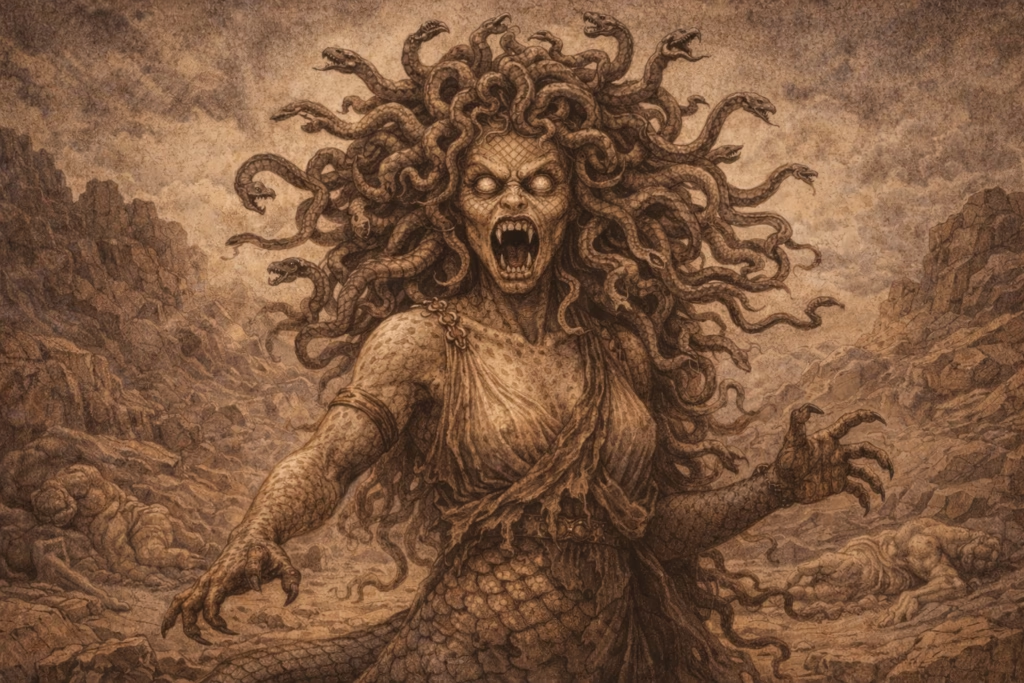
In the earliest Greek sources, Medusa is already a monster. She is born a Gorgon rather than transformed into one.
In these versions:
This Medusa functions like a natural force. She is not evil. She is lethal.
Later Greek and Roman authors introduce a different origin story, one that becomes dominant in later retellings.
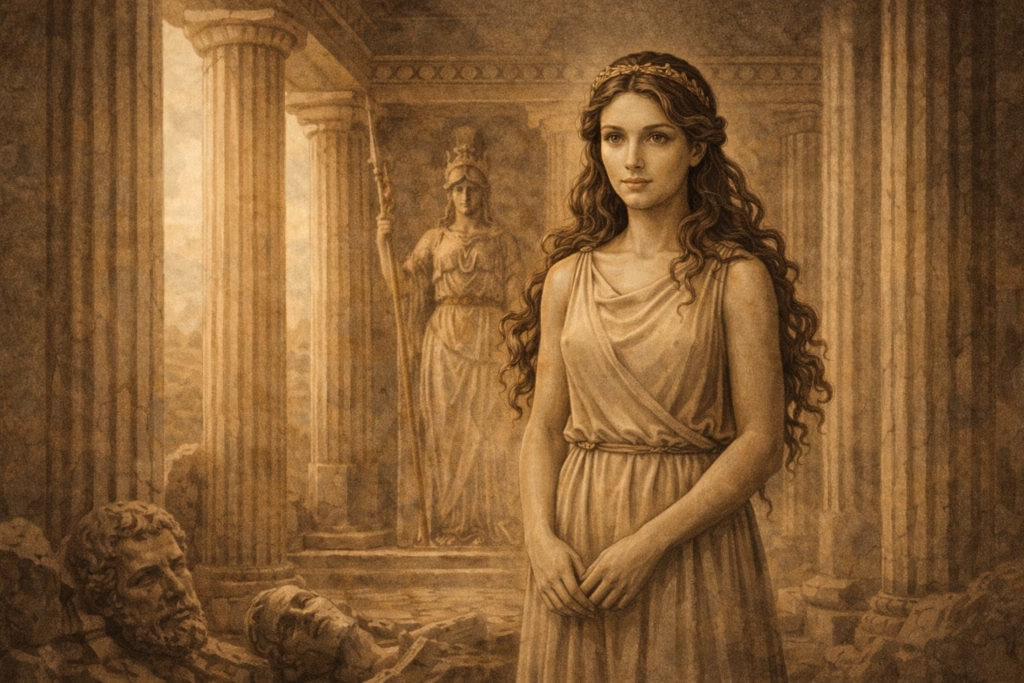
In this version, Medusa begins as a beautiful mortal woman serving as a priestess of Athena. She is pursued by Poseidon, and the encounter takes place within Athena’s temple.
Athena responds by transforming Medusa into a Gorgon.
This telling reframes Medusa as a figure shaped by punishment rather than born monstrous. The transformation reflects:
Athena does not destroy Medusa. She changes her. Survival becomes the punishment.
Medusa’s mortality is essential to her role in myth.
Because she can die:
This makes Medusa usable within hero mythology in a way her immortal sisters are not. Mortality turns her into a turning point rather than a permanent obstacle.
Medusa is killed by Perseus as part of a task meant to eliminate him.
Perseus succeeds by avoiding direct confrontation. He uses reflection, distance, and divine tools. The act is careful and impersonal.
From Medusa’s severed neck emerge Pegasus and Chrysaor. Even in death, Medusa produces life and force. Her story does not end with defeat.
After her death, Medusa’s head retains its power. Perseus uses it as a weapon, and Athena later places it on her shield.
At this point, Medusa’s image changes function.
She becomes:
In Greek culture, Medusa’s face appears on shields, armor, and architecture. The monster becomes a guardian.
The Gorgons embody layered fears rather than simple evil.
Medusa’s gaze is lethal because it cannot be safely returned.
Medusa’s appearance changes over time. Early depictions emphasize terror. Later art presents her as sorrowful, beautiful, or defiant.
What stays constant is her function. She marks a boundary and punishes the act of looking itself.
That tension is why Medusa remains one of the most enduring figures in mythology.
Today, Medusa is often reinterpreted as a symbol of survival, protection, and resistance. Her image communicates complexity immediately, danger mixed with defense, vulnerability turned into power.
That is why Gorgon imagery works so well on everyday objects. A Medusa motif does not need explanation to feel meaningful. It fits naturally on items like shirts and hoodies, where the symbol can be worn quietly, or on blankets and desk mats, where it becomes part of a personal space shaped by myth and meaning.
This kind of symbolism translates especially well into practical pieces designed for daily use, rather than decorative objects meant only to be looked at.
The origin of Medusa and the Gorgons is not a single, fixed story. It is a layered tradition that shifts over time. Medusa moves from ancient monster, to punished mortal, to protective symbol.
Her myth endures because it resists simplicity. Medusa exists at the edge of fear and defense, power and vulnerability, myth and meaning.