Physical Address
304 North Cardinal St.
Dorchester Center, MA 02124
Physical Address
304 North Cardinal St.
Dorchester Center, MA 02124

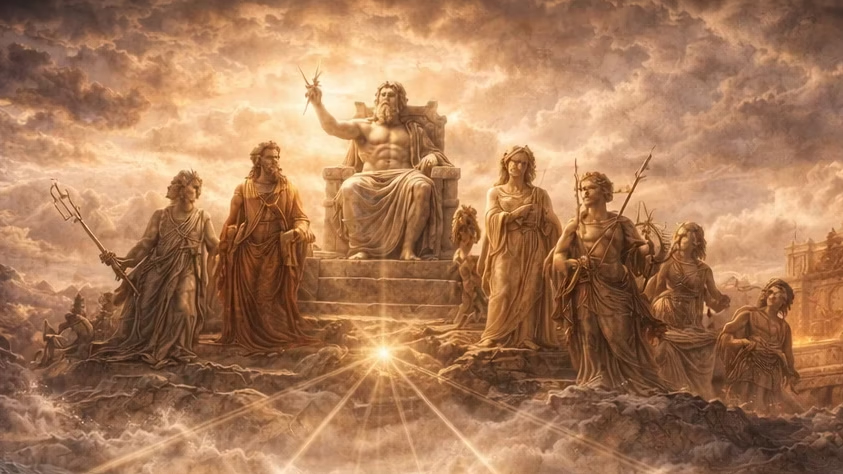
Greek mythology is not one long story. It is a network of major myths that explain how the world works, how the gods rule, and how humans struggle within that order. These myths were told and retold for centuries, shaping how the ancient Greeks understood nature, power, love, and loss.
If you know the major myths, everything else in Greek mythology becomes easier to follow. This guide explains the most important ones clearly, focusing on what happens and why each myth matters.
Every myth system starts by explaining existence itself.
In Greek mythology, everything begins with Chaos, a vast emptiness. From Chaos emerged the first primordial beings, including Gaia (Earth) and Uranus (Sky).
Their descendants were the Titans, who ruled before the Olympians. This myth establishes a core pattern in Greek thought: each generation replaces the last, not peacefully, but through conflict.
This idea of cyclical power change appears throughout Greek mythology.
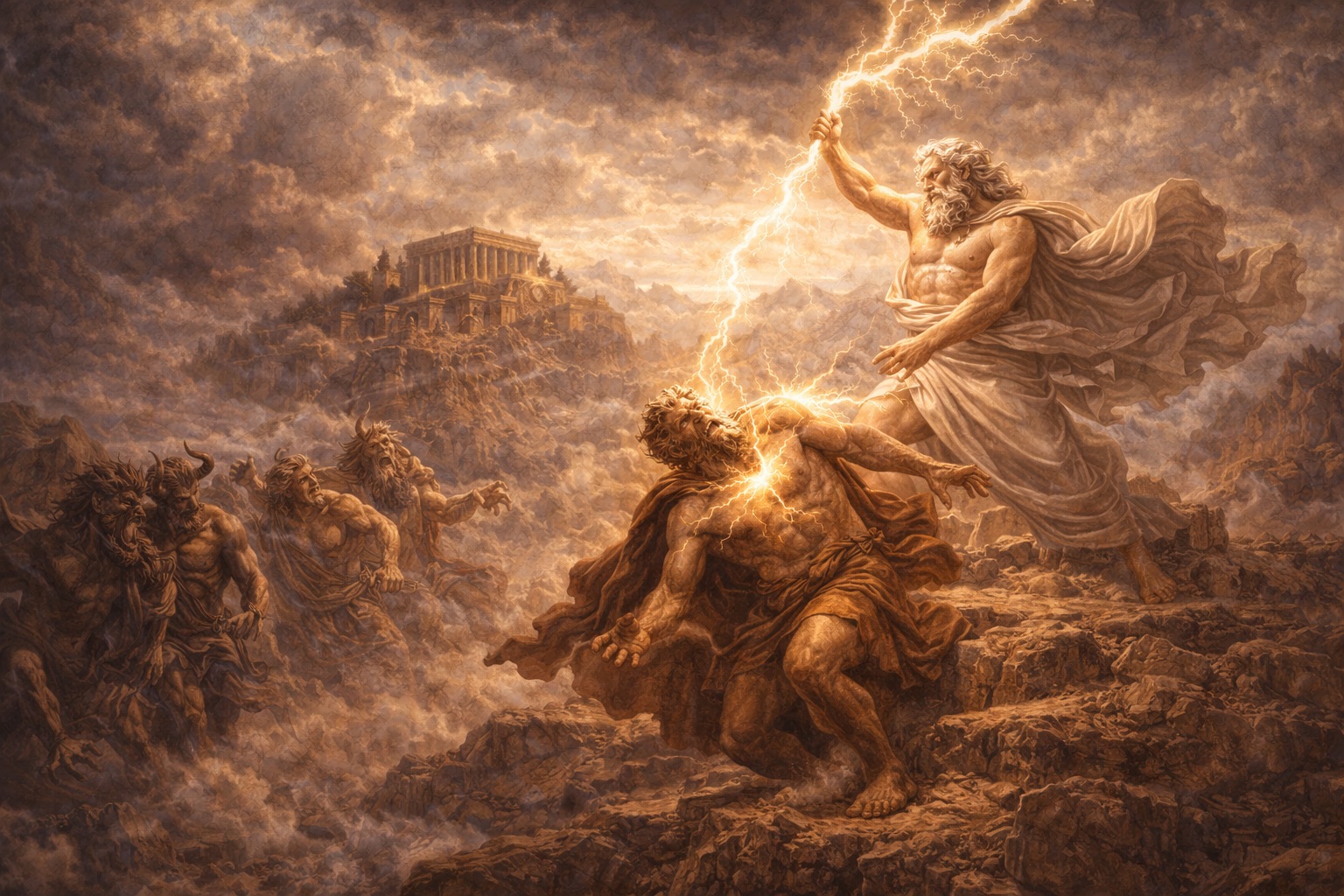
The rule of the Titans ends with the Titanomachy, the war between the Titans and the Olympian gods.
The Olympians, led by Zeus, overthrow the Titan ruler Cronus. After their victory, the Olympians divide power among themselves.
This myth explains:
Order replaces raw force, but violence is still part of that order. The Olympians are stable rulers, not gentle ones.
This myth explains the seasons and humanity’s dependence on agriculture.
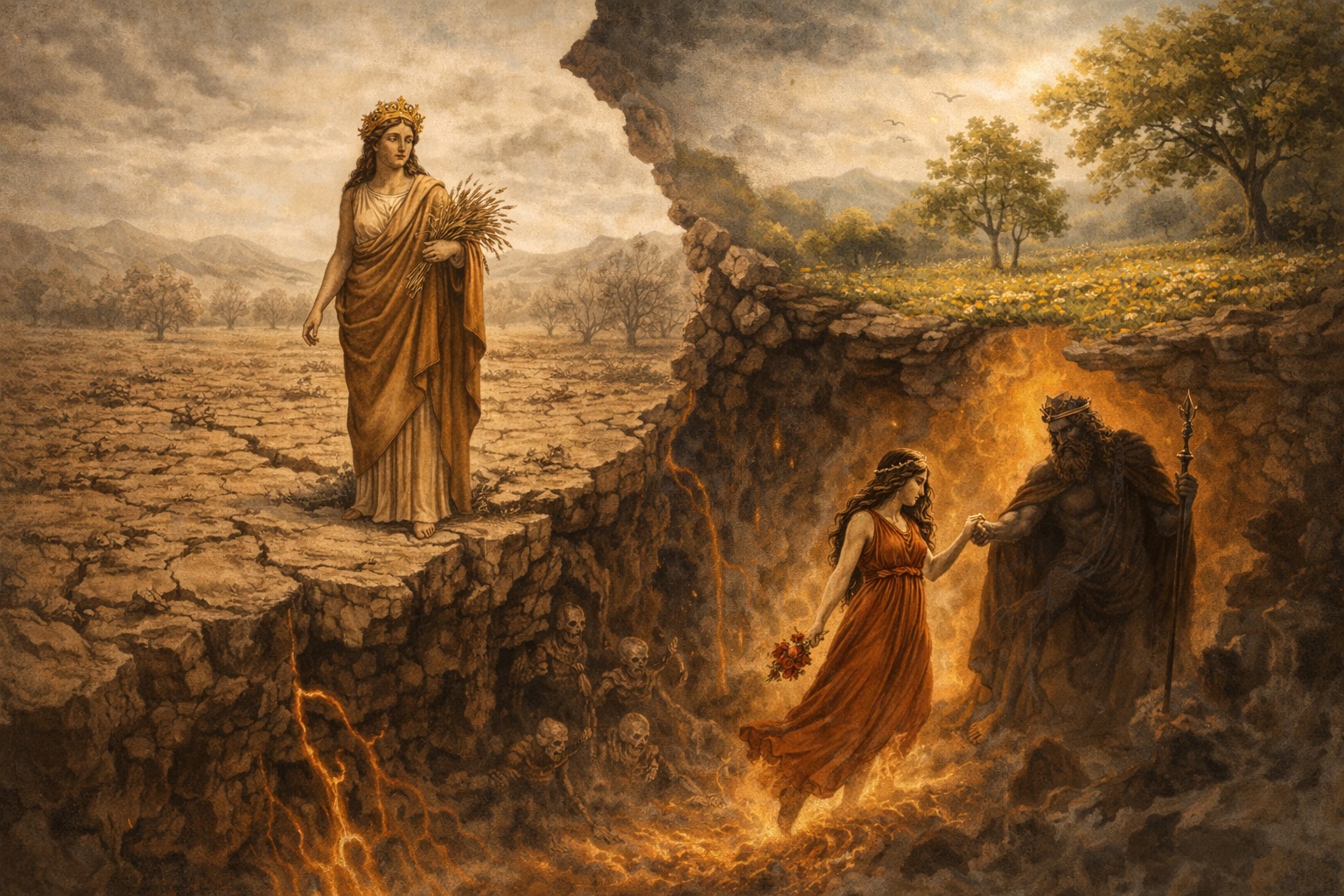
When Persephone is taken to the underworld by Hades, her mother Demeter withdraws her gifts from the earth. Crops fail. Life withers.
A compromise is reached. Persephone spends part of the year in the underworld and part on earth.
This myth explains:
It is one of the most emotionally grounded myths in Greek tradition.
The myth of Heracles defines what Greek heroism looks like.
Driven mad and forced to atone, Heracles must complete twelve impossible tasks. These include slaying monsters, capturing beasts, and descending into the underworld.
This myth matters because:
Heracles succeeds, but only through suffering. Greek myths rarely reward heroes without cost.
Perseus is sent to kill Medusa, a monster whose gaze turns people to stone.
He succeeds not through strength, but through planning and divine tools. He avoids direct sight and uses reflection to survive.
This myth teaches:
It is a foundational story about strategy and restraint.
The Trojan War is the central human conflict of Greek mythology.
It begins with a divine dispute and escalates into a decade-long war involving heroes like Achilles, Hector, and Odysseus.
This myth explores:
The war ends not with glory, but exhaustion and loss. Victory feels hollow, which is exactly the point.
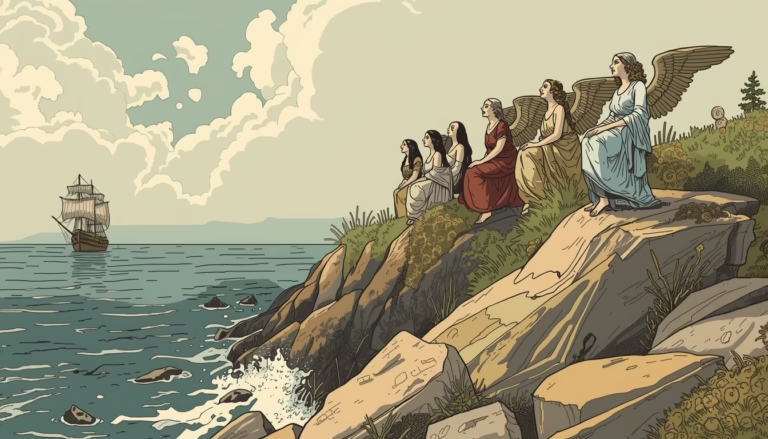
After the Trojan War, Odysseus spends ten years trying to return home.
His journey includes monsters, temptations, divine punishment, and his own mistakes. Odysseus survives because he adapts, plans, and endures.
This myth focuses on:
The Odyssey shows that winning a war is easier than living with its aftermath.
This myth centers on love and irreversible choice.
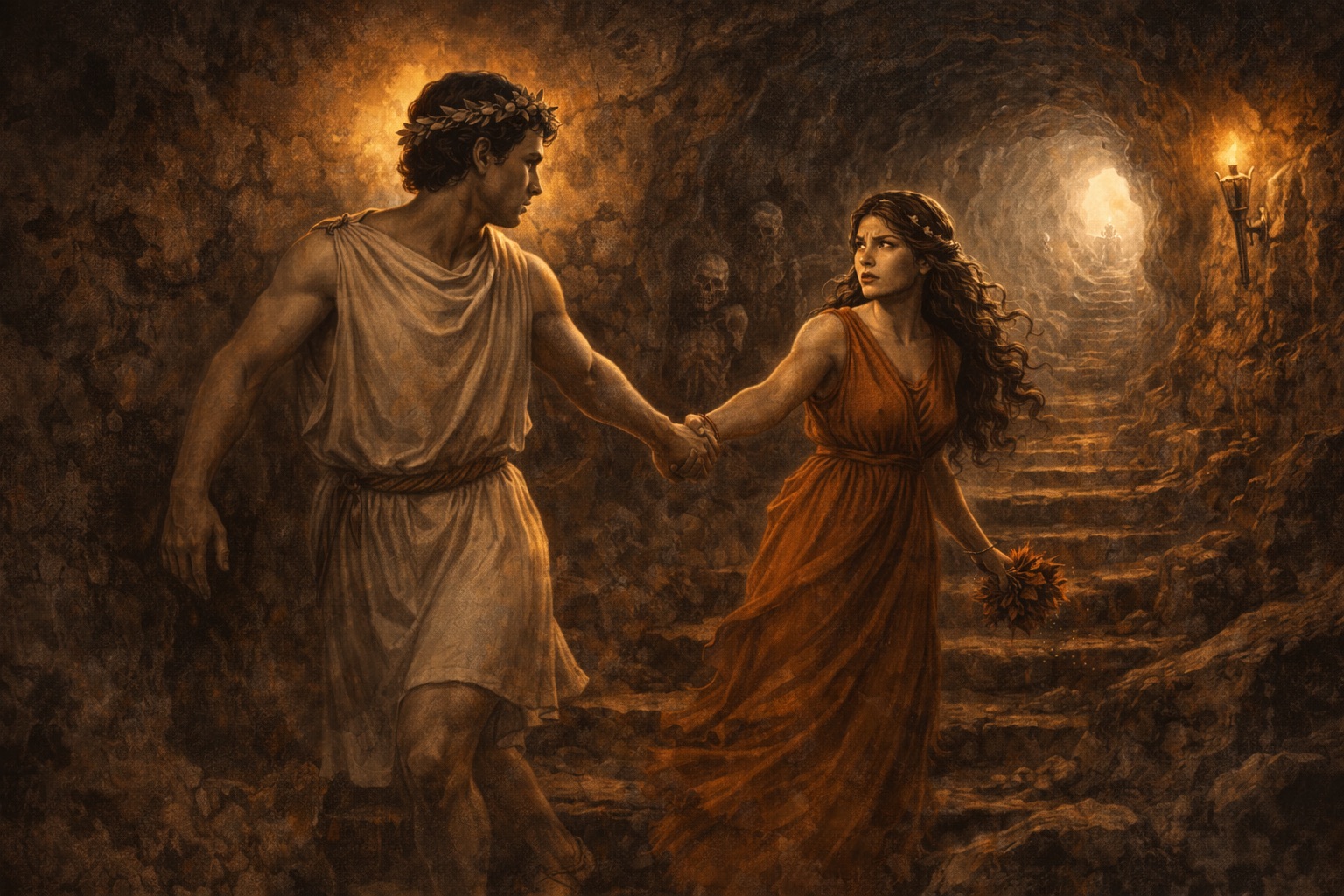
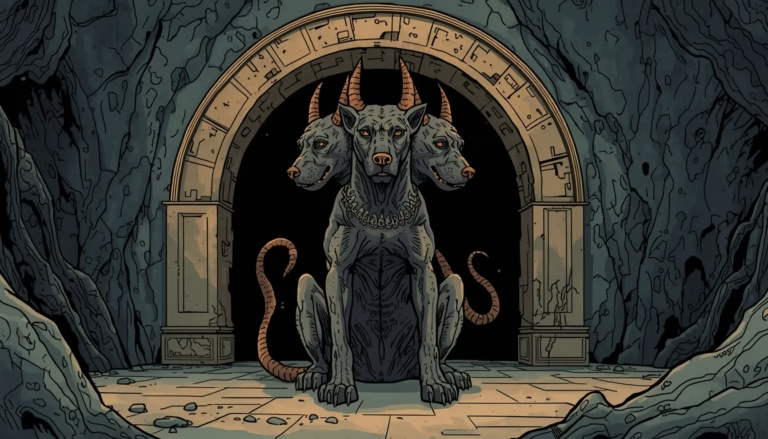
When Eurydice dies, Orpheus descends into the underworld to bring her back. He is allowed to lead her out on one condition: he must not look back.
He does. She is lost forever.
This myth explains:
It is one of the clearest examples of Greek mythology’s refusal to offer easy comfort.
Each of these myths explains a different part of the Greek worldview.
Together, they show:
Once you understand these major myths, smaller stories fit naturally into place.
Greek mythology stops feeling random and starts feeling intentional.
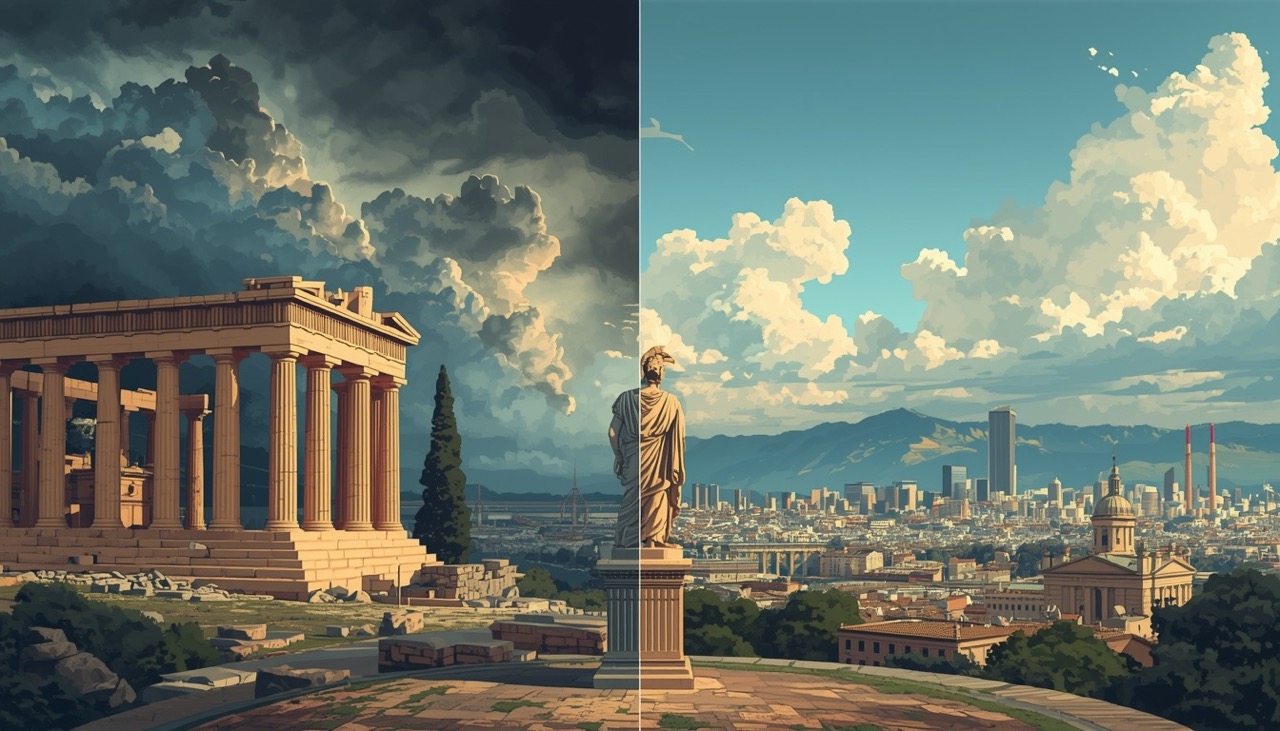
These major myths still influence how people think about power, loss, endurance, and identity. That is why their imagery continues to appear in education, art, and modern design.
Myth-inspired apparel and home items often reference these stories in subtle ways. If you enjoy carrying mythological meaning into daily life, PromyTheo products like shirts, hoodies, blankets, or desk mats are natural places for those symbols to live.

The major Greek myths explain how the ancient Greeks understood the world, the gods, and themselves. Learning these core stories gives structure to all of Greek mythology. Once they are familiar, every god, hero, and creature you encounter makes more sense within the larger mythic system.